I am a student at in Uru Mānuka. In 2020 I was a year 9 and in 2021 I will be a year 10. This is a place where I will be able to share my learning with you. Please note....some work won't be edited - just my first drafts, so there may be some surface errors. I would love your feedback, comments, thoughts and ideas.
Kia ora people, in social studies we have been learning about the plastic pollution in the ocean and how much it affects the marine life.
I learned that the ocean has a really big impact on earth. If it got more polluted it would destroy the way we lived and the ocean life. It also said that if this thing still gonna continue, the coral reefs will disappear 50 years from now.
Great Pacific Garbage Patch
The video that we watch has showed us a lot of informantion about the pollution, it's called seaspiracy, It showed us how badly damaged our ocean is, and how much it affected whales and dolphins. It showed us so many details about the pollution in the ocean and it influences us so much to help. It showed us how cruel human can be, and how much the marine life suffered from this problem.
I thought everyone should take this topic seriously, because there will be a time that the ocean die, and if the ocean dies, the whale dies and if there are no whales there will be no phytoplankton that are produced, if there are no phytoplankton produced it would reduce the clean air we breathe because it absorbs carbon dioxide four times than
amazon rainforest. With no ocean, we die. I also think this is really messed up and that government should prioritise.
We can help overcome this situation by joining groups that cleans the ocean, reduce the use of plastics of our everyday life and instead use utensils that are made from wood, use your own water bottle and donate to websites that are working on a project to clean the ocean and shores.
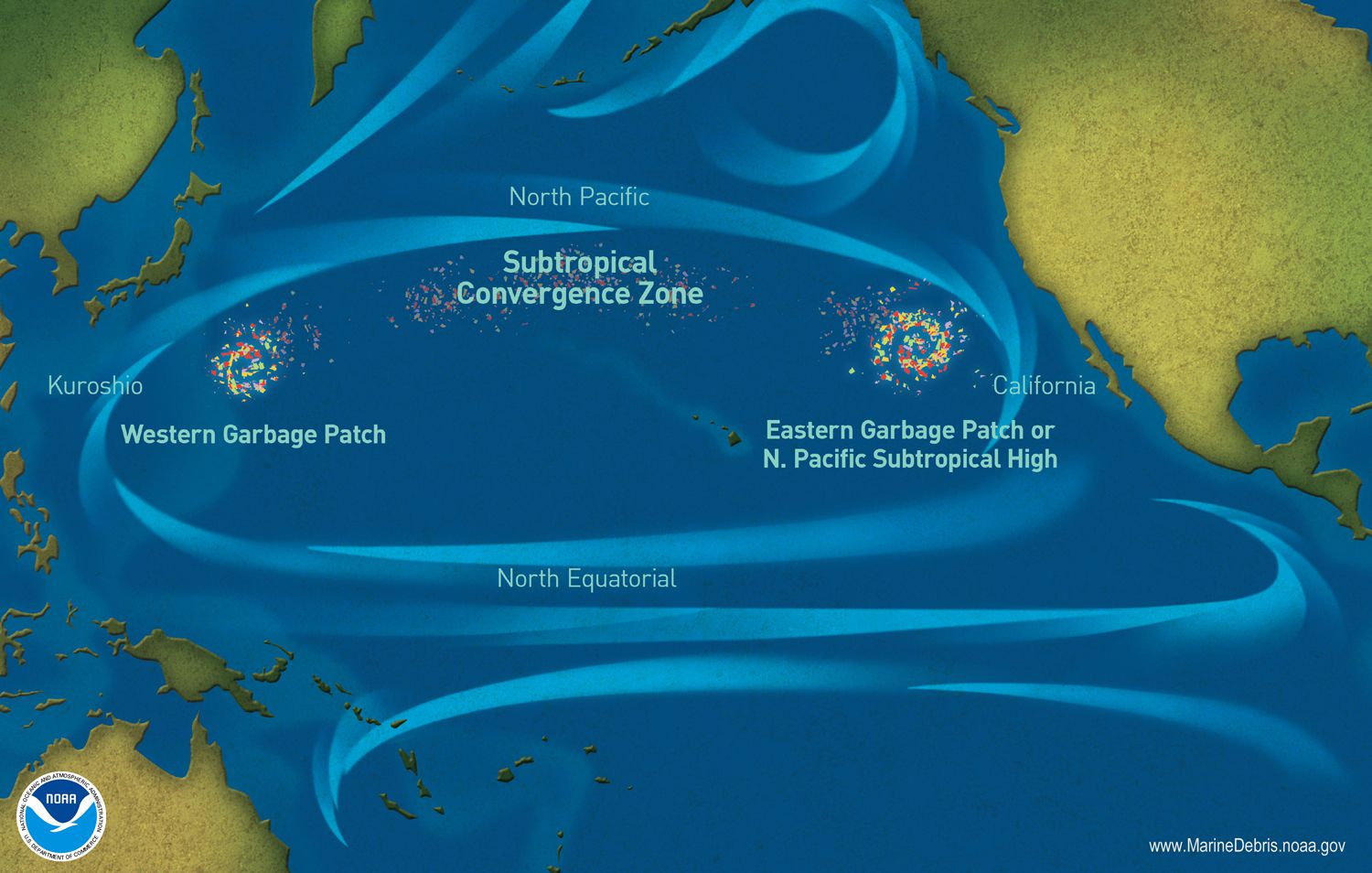
The Great Pacific Garbage Patch (GPGP) is the largest of the five offshore plastic accumulation zones in the world’s oceans. It is located halfway between Hawaii and California.
The GPGP covers an estimated surface area of 1.6 million square kilometers, an area twice the size of Texas or three times the size of France.
Using too much plastic causes it to stack up and combined with other rubbishes when it stacks up there will be more and more plastic in our landfill, some of them will be sent to waterways and through the ocean which affects the ocean lives.
Action
Cause; Why did it happen?
Effect (Short/Long Term); What happened after?
Littering
Lazy/Ignorant
Place becomes messy/Rubbish goes into the waterway.
Daily use of plastic
Plastic stacking up
More rubbish in the rubbish land, then thrown to the ocean.
Banning plastic bags
Plastic Pollution
Less plastic pollution, less plastic in the ocean, Lower the chances of climate change.
Joining groups that cleans the shore/ocean
People don't want more plastic in the ocean.
Helps to clean the environment even in just a bit.
Tones of rubbish being dumped into the ocean
Over using plastic, not using recyclables
Killing the ocean life, causing the corals to die and disappear within years from now.
In the 1970s Bob Geldof was a singer in the Broomtown Rats. He was famous for songs like "I Don't Like Mondays" and "Rat Trap". Bob Geldof was involved in a spontaneous event that includes many of the best-known pop singers and writers invited. In the 1985 he was one of the main organizers of the event Live Aid Concert at Wembley.
Midge Ure
Midge Ure was a Scottish singer that was involved in several bands, he was the frontman of Ultravox. Together with Bob Geldof, they wrote the song "They Don't Know It's Christmas" and assembled an all-star band of British musicians. The song sold millions of copies over 1984, he prompted Bob Geldof to organize the concert; Live Aid in 1985.
Bob Geldof and Midge Ure wrote the song 'They Don't Know It's Christmas' The track, which was first released on25 November 1984, was written byBoomtown RatsfrontmanBob Geldof andUltravoxguitaristMidge Ureas a reaction to the shocking television reports of the 1983-85 Ethiopian famine.
Created with the sole purpose of raising funds for the people of Ethiopia, the track featured cameos from famous pop faces- with everyone from Bono to Boy George taking part. After achieving a Christmas number one that year, the track went on to be the fastest-selling single in UK history
Here is the full lyrics of the song:
It's Christmas time, there's no need to be afraid
At Christmas time, we let in light and we banish shade
And in our world of plenty we can spread a smile of joy Throw your arms around the world at Christmas time
But say a prayer, Pray for the other ones At Christmas time it's hard, but when you're having fun
There's a world outside your window And it's a world of dread and fear
Where the only water flowing
Is the bitter sting of tears
And the Christmas bells that ring There are the clanging chimes of doom
Well tonight thank God it's them instead of you
And there won't be snow in Africa this Christmas time The greatest gift they'll get this year is life
Where nothing ever grows No rain nor rivers flow
Do they know it's Christmas time at all?
Here's to you Raise a glass for everyone
Spare a thought this yuletide for the deprived If the table was turned would you survive
Here's to them Underneath that burning sun
You ain't gotta feel guilt just selfless Give a little help to the helpless
Do they know it's Christmas time at all?
Feed the world
Feed the world
Feed the world
Feed the world
Feed the world Let them know it's Christmas time again Feed the world Let them know it's Christmas time again Feed the world Let them know it's Christmas time again Let them know it's Christmas time again
Feed the world
Feed the world Feed the world Feed the world Feed the world
Feed the world (Feed the world) Feed the world Feed the world
Kia Ora bloggers, this blog is supposed to be posted 2/3 weeks ago, but I wasn't at school during the times my class was looking and studying this topic. Today is the only day I had a chance to blog about this topic; Parihaka. Bare with me as I don't know much about the topic.
The song tells usthe story of the Taranaki Parihaka peaceful protests. Finn was given a book on the topic (Dick Scott's Ask That Mountain) by his sister and told to write a song about it.
The line that expresses their passive resistance method is "Te Whiti he used the language of the spirit, Then stood accused, the madman and his dream, He saw the train go roaring through the tunnel, He heard the voice travel on the magic wire, But he loved the silence of the river,"
You can't pull out the roots means that the soldiers can't get rid of the crops that Parihaka grew during their passive resistance movement.
It shows significance because it was a story that was untold and hidden for years and it took the government over 100 years later for an apology. The raukura, the single white albatross feather was worn by Te Whiti and Tohu's followers symbolize peace.
The event was significant because Te Whiti and Tohu's aims were to resist the invasion of their land and to protect Māori independence. They drew on both Māori and Christian teachings and advocated good relationships between all races as long as Māori ownership and independence were respected.
Te Whiti and Tohu were arrested and jailed for 16 months, 1,600 Parihaka inhabitants were expelled and dispersed throughout Taranaki without food or shelter and the remaining 600 residents were issued with government passes to control their movement.
Here is the full lyrics of Parihaka by Tim Finn;
My friend, My friend, I hate to see you suffer,
Events conspire to bring us to our knees,
My friend, my friend, you've taken this the wrong way,
Rise up, defend yourself, never give in,
Look to the sky, the spirit of Te Whiti,
The endless tide is murmuring his name.
I know Te Whiti will never be defeated,
And even at the darkest hour,
His presence will remain.
I'll sing to you the song of Parihaka.
Te Whiti he used the language of the spirit,
Then stood accused, the madman and his dream,
He saw the train go roaring through the tunnel,
He heard the voice travel on the magic wire,
But he loved the silence of the river,
He watched the dog piss on the cannon's wheel.
I know Te Whiti will never be defeated,
And even at the darkest hour,
His presence will remain.
I'll sing to you the song of Parihaka.
One day you'll know the truth,
They can't pull out the roots,
Come and take me home,
To weep for my lost brother.
They gather still, the clouds of Taranaki,
His children's children wearing the white plume,
So take me for the sins of these sad islands,
The wave still breaks on the rock of Rouhotu.
And when you taste the salt that's on your pudding,
Kia ora bloggers this past two days in Social Studies we were learning about the Vietnam war, and songs that were written by the artist that played in Woodstock. These songs were written because many people around the world are against the war.
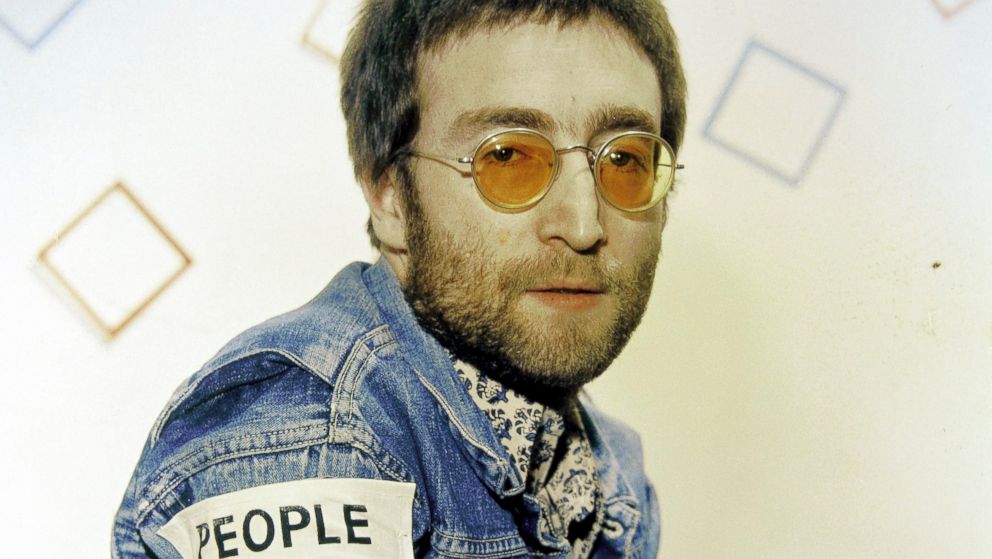
There are lots of songs to choose from but I choose the song "Give Peace a Chance". This song is an antiwar song, and it was written by John Lennon. In my understanding, he is saying that the Vietnam war should stop and spread peace, and not war because everybody is against it. Everybody is talking about a lot of stuff but the only thing that he and many people wanted to be heard is to give peace a chance and stop the war.
All we are saying is give peace a chance All we are saying is give peace a chance
C'mon Ev'rybody's talking about Ministers Sinisters, Banisters and canisters Bishops and Fishops and Rabbis and Pop eyes And bye bye, bye byes
All we are saying is give peace a chance All we are saying is give peace a chance
Let me tell you now Ev'rybody's talking about Revolution, evolution, masturbation Flagellation, regulation, integrations Meditations, United Nations Congratulations
All we are saying is give peace a chance All we are saying is give peace a chance
Ev'rybody's talking about John and Yoko, Timmy Leary, Rosemary Tommy Smothers, Bobby Dylan, Tommy Cooper Derek Taylor, Norman Mailer Alan Ginsberg, Hare Krishna Hare, Hare Krishna
All we are saying is give peace a chance All we are saying is give peace a chance
Kia ora bloggers, this past few lessons on Social Studies we were studying about the ANZAC and Turkish war in Gallipoli. We also made a map about it just like the American Slave Trade. (Check out my other post to see American Slave Trade.
You will hear this song every 25th of April every year, which is ANZAC Day. The Last Post song is thebugle call that signifies the end of the day's activities. It is also sounded at military funerals to indicate that the soldier has gone to his final rest and at commemorative services such as Anzac Day and Remembrance Day.
A man playing The Last Post in front of the soldiers.
The last post was first played and published in the 1790s, the Last Post was one of many bugle calls used by the British army. These calls were used to help soldiers keep track of time when living in encampments. The last post isoriginated with British troops stationed in the Netherlands, where it drew on an older Dutch custom, called taptoe, from which comes the term tattoo as in Military tattoo. The taptoe was also used to signal the end of the day but originated from a signal that beer taps had to be shut, hence that the day had ended.
Anzac Day - Anzac Day is a national day of remembrance in Australia and New Zealand that broadly commemorates all Australians and New Zealanders "who served and died in all wars, conflicts, and peacekeeping operations" and "the contribution and suffering of all those who have served